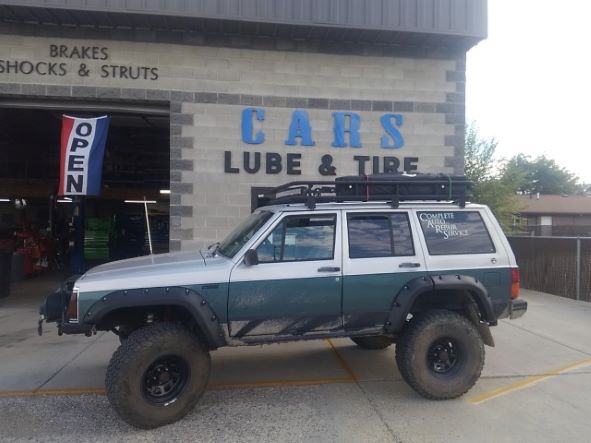
CARS = Complete Auto Repair Service, 660 E Main Street Wellington, Utah, Ut (435) 637-5337 Next to Post Office. Is your One stop shop for all you Auto Repair needs. We do = Tires, Alignment, oil change, tune up, brakes, off road, 4x4, lift kits, mufflers, exhaust and much more. North of Moab, Green River, Sunnyside, South of Price, Helper, spanish Fork, Castle gate, carbonville. on Hwy 191/6

Showing posts with label Transmission. Show all posts

Tuesday, September 1, 2026

Preventative Maintenance in Utah


Complete Auto Repair Service 
  (CARS)
(435) 637-5337
660 E. Main St.  Wellington UT  84542
Hwy 191  / 6   Next to Post Office


Preventative Maintenance Check #2  Cont.
( _ ) 13. Power steering fluid
( _ ) 14. Automatic transmission fluid
( _ ) 15. Oil and coolant leaks
( _ ) 16. Battery
( _ ) 17. Exhaust system
( _ ) 18. Differential fluid
( _ ) 19. Transmission fluid
( _ ) 20. Transfer case fluid
( _ ) 21. Brakes
( _ ) 22. Change oil and filter
( _ ) 23. Grease lube points
( _ ) 24. Change fuel filter
( _ ) 25. Change Air cleaner
( _ ) 26. Mark down service miles in owners manual
( _ ) 27. Make P.M. reminder sticker

 13. Power steering fluid
Check your power steering fluid. If it is low, make sure to add the right fluid. Check your owners manual as to not cause a system failure by adding the wrong fluid.  If there is any doubt have a mechanic check it for you.
 14. Automatic transmission fluid
With the engine running and in park with the park brake set check the automatic transmission fluid level. Also check the color and smell. If it is dark and has a burnt odor it needs further examination. You should have the oil and filter changed every 30,000 miles or according to your owners manual.
15. Oil and coolant leaks
Look around and under the engine and transmission area for any sign of leakage. Seepage and minor leaks may not be worth repairing, but at least you will have a good idea as to the problem if it gets worse. If you find a coolant leak, it should be repaired as soon as possible. This not only will save a breakdown but is an environmental issue as well.   If there is any doubt have a mechanic check it for you.
16. Battery
Make sure that the top of the battery is clean. A battery can lose its charge if there is dirt between the positive and negative posts. If there is corrosion on the battery posts this needs to be cleaned off.  Baking soda is the best thing to break down this corrosion. Mix some with water and brush on with an old paint brush. Then thoroughly flush with water until all the corrosion is gone. You can buy anti corrosion rings or a battery post aerosol to help keep the corrosion from forming.  If your battery is one that you can check the electrolyte level in, you need to do so. Bring the level up to the full ring with distilled water. Most of the newer batteries are sealed and have a condition eye. This eye should be either green or blue. If it is black then this indicates a low charge. If the eye is clear or yellow, then the electrolyte is low and the battery needs to be replaced. This may also be a sign that the regulator is over charging the battery.
 17. Exhaust system
Look over the exhaust system for any lose bolts, loose mountings or cracks. Cracking around the muffler inlet or outlet is common. If caught in time this could save you from losing part of the exhaust system on a trail. Seeing a muffler on the side of a trail is not uncommon.
18. Differential Fluid
19. Transmission fluid
20. Transfer case fluid
In knowing what to look for, you can check the condition of your transmission and axle gears, by looking at the fluid and not just checking the levels. On the drive axles the fluid is checked at the plug hole half way up on the differential housing or cover plate. The oil level is just to the bottom of the hole. Stick your finger in to get enough on it see if there is any metal flakes in the oil. If there is any metal in the oil, this can cause the bearings to fail and also the seals to leak. If caught early this can save a lot of money as well as a break down. The metal comes from the gears put under heavy load. And since there are no filters on these gear boxes, the only way to get rid of the metal flakes is to change the oil. This is true of the transmission and transfer case as well. The oil should not smell or look burnt. If you add to or change the oils in the differentials, transmission and transfer case, make sure you use the right oil. If you have a limited slip rear end you can damage the friction plates by using regular 90 weight oil. Also be very careful of the oil in the transfer case, some take A.T.F. while others use a heavier oil. If you find that the transfer case is low and the transmission is overfilled, you might have an internal leak.  If there is any doubt have a mechanic check it for you.
21. Brakes
From under the vehicle look at the brakes. See if there is any leakage on or around the brakes. This could be from brake fluid or an axle seal. The brake shoes should bee free of any oil contamination. You should lift up the vehicle and remove a wheel just as you would to change a flat. One at a time you should remove a front and a rear wheel.  ( Or complete Auto repair Service should do this for you)   If you have disc brakes look at the pads to see if they need to be replaced due to wear. The pads should have even wear top to bottom and inner and outer should be the same thickness. If they do not there is a problem with the caliper hanging up. On drum brakes it will be necessary to remove a drum as well to see the shoes.
22. Change oil and filter
23. Grease lube points
Now is the time to change the oil and oil filter and check the grease lube points if needed. Always change the oil and filter at the same time.  Make sure to check your oil  at least once a month and keep it at the right level. Not doing so can burn up the engine.
24. Change fuel filter
25. Change air cleaner
Change the fuel and air cleaners at least once a year. If you drive on dusty roads this may have to be done more often.
Call today for and Appointment.
(435) 637-5337
carsautorepairutah.blogspot.com
North of Moab   In Carbon county
6 miles South of Price, Helper
 South of Spanish Fork, Provo, Utah
Local Shop with Local Employees


Sunday, February 1, 2026

Transmission & Alignment Service Price & Helper Utah


TRANSMISSION SERVICE

CARS = Complete Auto Repair Service  
660 E. Main Wellington Utah 84542
highway 191 / 6   Next to Post Office
carsautorepairutah.blogspot.com
(435) 637-5337

     TRANSMISSION SERVICE Repairing or replacing your transmission can be one of the most expensive repairs you may have to make on your vehicle. Maintaining your transmission according to your vehicle manufacturer's recommendations, not only prolongs its life but it can prevent a costly repair or breakdown in the future.

      To help maintain a safe and constant operating temperature, your vehicle uses transmission fluid to cool and lubricate the moving parts. The fluid reduces the amount of potentially damaging heat inside the transmission and helps increase the life of this important system.

     Because some of the ingredients in the transmission fluid break down over time due to this heat, many vehicle manufacturers recommend the fluid be replaced at specified maintenance intervals. Check your Manuel or check with us to find out when to replace your fluid.

We can Aligning your vehicle when you get new tires,  stop by and check us out.

                            Call today for a check up!
                                   (435)637-5337

Review us on Google: https://g.page/r/CVluIYctk0m4EAE/review

C.A.R.S. = Complete Auto Repair Service We are here to help you with all your Auto Repair needs.
 North Of Moab Utah 
South of Price, Helper, Spanish  Fork UT

Saturday, February 1, 2025

Transmission at CARS Complete Auto Repair Service in Utah

Transmission fluid is a slippery liquid that acts as a lubricant for all of the moving parts inside your transmission. In an automatic transmission, this fluid also serves as a coolant and a viscous fluid that transmits power from the engine to the transmission.
Changing automatic transmission fluid is best left to a mechanic equipped with a transmission flusher, like this which replaces the fluid more thoroughly than you could achieve with gravity alone.
A variety of fluids are used for different transmissions. Automatic transmissions use automatic transmission fluid. Manual transmissions use a variety of oils: regular motor oil, heavyweight hypoid gear oil or even automatic transmission fluid in some cases. Your owner's manual will tell you what your transmission calls for.
Whether you have a manual or an automatic transmission. Manual: Most manufacturers recommend that manual transmission fluid be changed every 30,000 to 60,000 miles. Under heavy-duty use, some manufacturers suggest changing transmission fluid every 15,000 miles.
Automatic: Service intervals for an automatic transmission vary from every 30,000 miles. The typical service interval is 60,000 to 100,000 miles. Changing it more often does no harm.
Why should you do this?
Manual: In a manual transmission, the problem is not so much the fluid degradation, but rather fluid contamination. This contamination occurs over time as the synchronizers, bearings and gears in the transmission wear out. The resulting metal particles then float around in the lubricant. And we all know that oil with microscopic particles of metal in it does not lubricate as well as clean oil. So if these contaminants are not drained out, they will shorten the life of your transmission.
Automatic: Because more heat is generated in an automatic transmission, automatic transmission fluid actually degrades and breaks down with use.
In addition, like in a manual transmission, automatic transmission fluid will also become contaminated with worn bits of the transmission. If these contaminants are not drained out, they will shorten the life of your transmission.
carsautorepairutah.blogspot.com 
What happens if 
If you don't change the transmission fluid on schedule, you'll be lubricating your transmission with metal shavings and other contaminants. This will shorten the transmission's life. In other words, changing your transmission fluid at the correct interval is a good investment.
Is there any maintenance required between intervals?
Automakers have gotten better in recent years about labeling or color-coding dipsticks. The ring on the right is red to match the automatic transmission fluid, the level of which this dipstick measures. The yellow ring is clearly marked "engine oil."
Yes, It's important to regularly check the transmission fluid level between service intervals. Letting your car run low on transmission fluid can cause the transmission to shift improperly — or not at all. It also can harm the internal parts of your transmission, which will not be properly lubricated. Unfortunately, you may not hear any noises or have other clues that your transmission is low on fluid, until it's too late. So it's important to get it checked.
Here's how you can check your transmission fluid level:
Manual: Checking the transmission fluid in a manual transmission can be difficult. A few thoughtful manufacturers have included a dipstick, but that's the exception rather than the rule. If you own a car with a manual transmission, we suggest that you ask your mechanic to check the fluid level when your car is up on the lift during an oil change. It takes just a minute.
Automatic: If you own a car with an automatic transmission, your car will have a dipstick for this purpose. Be careful not to make the common mistake of confusing the transmission dipstick with the crankcase dipstick.
Complete Auto Repair Service 
Hwy 191 / 6  Next to Post Office
carsautorepairutah.blogspot.com
660 E Main St. Wellington UT  84542
(435) 637=5337


C.A.R.S. = Complete Auto Repair Service We are here to help you with all your Auto Repair needs. (435) 637-5337 Next to Post Office North Of Moab Utah South of Price, Helper, Sunnyside, SLC, Provo UT

Dealer Warranty - DID YOU KNOW

Dealer Warranty - DID YOU KNOW According to Consumer Reports https://www.consumerreports.org/warranties-guarantees “The Magnuson-Moss Warran...

CARS Newsletter