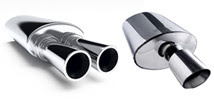
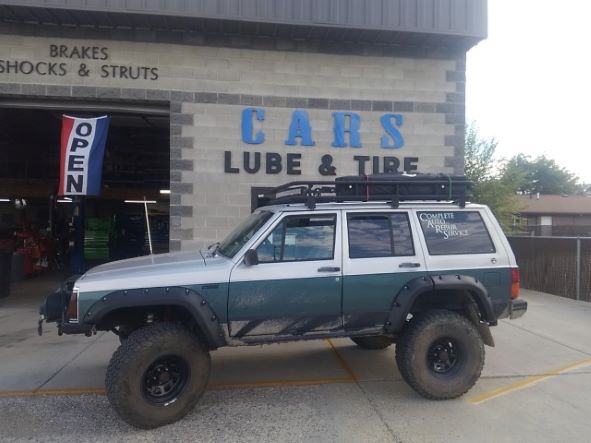
CARS = Complete Auto Repair Service, 660 E Main Street Wellington, Utah, Ut (435) 637-5337 Next to Post Office. Is your One stop shop for all you Auto Repair needs. We do = Tires, Alignment, oil change, tune up, brakes, off road, 4x4, lift kits, mufflers, exhaust and much more. North of Moab, Green River, Sunnyside, South of Price, Helper, spanish Fork, Castle gate, carbonville. on Hwy 191/6

Showing posts with label Auto repair. Show all posts

Sunday, February 15, 2026

Tires = Price & Helper Utah Auto Repair

#C.A.R.S

CARS TIRES

Tire pressure is a measure of the amount of air in a vehicle's tires, in pounds per square inch. The required service involves checking the tires' pressure with a pressure gauge, at least monthly, if not more frequently. But then you knew that.

Why do I have to do this?     Having the proper tire pressure is a crucial safety issue. Next to the brakes, the tires are the most important safety devices on your car. Incorrect tire pressure will compromise cornering, braking and stability. And in the worst-case scenario, improper tire pressure can lead to tire failure — and a serious accident. Incorrect tire pressure also will affect your comfort, fuel economy and tire life.

What happens if I don't do this?     If tire pressure is too high, then less of the tire touches the ground. As a consequence, your car will bounce around on the road. And when your tires are bouncing instead of firmly planted on the road, traction suffers and so do your stopping distances. You'll also feel a decrease in ride comfort. (Hint: If you notice that every tie you own has coffee on it, check your tire pressure. It may be too high.)

C.A.R.S. Tire Pressure:    

Most vehicles list tire pressure requirements on one of the door posts, most often the driver's.

     If tire pressure is too low, then too much of the tire's surface area touches the ground, which increases friction between the road and the tire. As a result, not only will your tires wear prematurely, but they also could overheat. Overheating can lead to tread separation — and a nasty accident. One sign of low tire pressure is if your tires squeal when cornering.

     You need to check your tire pressure even if your tires aren't leaking. Why? Because tire pressure also changes with the temperature outside. Tire pressure decreases by about 1 pound per square inch for every 10-degree drop in outside air temperature. So if you last had your tire pressure checked in July, when it was 80 degrees outside, and it's now January — and the temperature is minus 20 — your tires may be underinflated by 10 pounds, which is dangerous.

Tire Rotation:     We know that all tires rotate. But we're talking about another kind of rotation — rotating tires to different corners of the car and maybe even reversing the direction in which they turn. 
     Many tires are rotated front-to-back and side-to-side, but some tires are directional, which means they're only supposed to turn in one direction. They have to stay on the same side of the car. Directional tires often have arrows on the tire's sidewall to show you the direction in which they should turn.

If you're not sure which kind of tires you have, check with your mechanic.

Should I do this service when it's recommended?
    The financial benefit of rotating tires is that you'll increase the useful life of the tire. Instead, you can ask your mechanic to rotate your tires when they're already off your car for another service, such as a brake repair. th
ey may do it for Less.

CARS = Complete Auto Repair Service    Hwy 191 / 6
660 E. Main St. Wellington Utah

       - Next to Post Office

-North of Moab, Green River Utah

                                            -6 miles South of Price, Helper, Spanish Fork Utah

Thank you for your patronage.  Please Leave a review on google
Monday, September 1, 2025

Auto Repair Gift Ideas CARS Ut.

GIFT IDEAS 
Need last minute gift ideas?   Let's put our heads together and see what
We can do.  Oil changes, wiper blades, batteries, Tires for the new driver!
How about a Winch for Dad? Maybe some maintenance for Mom. 
 January is typically a slow time of year but a great opportunity for you to get your car's taken care of.  Give us a call, we'll get-er done.

C.A.R.S. = Complete Auto Repair Service We are here to help you with all your Auto Repair needs. (435) 637-5337 Next to Post Office North Of Moab Utah South of Price, Helper, Sunnyside, SLC, Provo UT


Wednesday, July 16, 2025

Winter time is the best time for Auto repair Maintenance


Winter  time is the best time for Auto  repair Maintenance 
You might ask why is this?
Jan and Feb and known to be slow months for Auto Repair facility's so it's a good time for you.  They can usually get you in on a more timely manner.
Why not come in to CARS = Complete Auto Repair Service in Wellington Utah and get your new Tires, Alignment, Oil change or Tune up.  New Mufflers are alway fun.  If you have been Off Roading it is a good time to get things fixed up without the long wait time. 

660 East Main Street Wellington Utah 84542  NEXT TO Post Office
(435) 637-5337
NORTH of MoabGreen River, Sunny Side,  SOUTH of Price, Helper, Spanish Fork.
www.carsautorepairutah.blogspot.com
https://www.facebook.com/carsbellingham


C.A.R.S. = Complete Auto Repair Service We are here to help you with all your Auto Repair needs. (435) 637-5337 Next to Post Office North Of Moab Utah South of Price, Helper, Sunnyside, SLC, Provo UT

Saturday, February 1, 2025

Transmission at CARS Complete Auto Repair Service in Utah

Transmission fluid is a slippery liquid that acts as a lubricant for all of the moving parts inside your transmission. In an automatic transmission, this fluid also serves as a coolant and a viscous fluid that transmits power from the engine to the transmission.
Changing automatic transmission fluid is best left to a mechanic equipped with a transmission flusher, like this which replaces the fluid more thoroughly than you could achieve with gravity alone.
A variety of fluids are used for different transmissions. Automatic transmissions use automatic transmission fluid. Manual transmissions use a variety of oils: regular motor oil, heavyweight hypoid gear oil or even automatic transmission fluid in some cases. Your owner's manual will tell you what your transmission calls for.
Whether you have a manual or an automatic transmission. Manual: Most manufacturers recommend that manual transmission fluid be changed every 30,000 to 60,000 miles. Under heavy-duty use, some manufacturers suggest changing transmission fluid every 15,000 miles.
Automatic: Service intervals for an automatic transmission vary from every 30,000 miles. The typical service interval is 60,000 to 100,000 miles. Changing it more often does no harm.
Why should you do this?
Manual: In a manual transmission, the problem is not so much the fluid degradation, but rather fluid contamination. This contamination occurs over time as the synchronizers, bearings and gears in the transmission wear out. The resulting metal particles then float around in the lubricant. And we all know that oil with microscopic particles of metal in it does not lubricate as well as clean oil. So if these contaminants are not drained out, they will shorten the life of your transmission.
Automatic: Because more heat is generated in an automatic transmission, automatic transmission fluid actually degrades and breaks down with use.
In addition, like in a manual transmission, automatic transmission fluid will also become contaminated with worn bits of the transmission. If these contaminants are not drained out, they will shorten the life of your transmission.
carsautorepairutah.blogspot.com 
What happens if 
If you don't change the transmission fluid on schedule, you'll be lubricating your transmission with metal shavings and other contaminants. This will shorten the transmission's life. In other words, changing your transmission fluid at the correct interval is a good investment.
Is there any maintenance required between intervals?
Automakers have gotten better in recent years about labeling or color-coding dipsticks. The ring on the right is red to match the automatic transmission fluid, the level of which this dipstick measures. The yellow ring is clearly marked "engine oil."
Yes, It's important to regularly check the transmission fluid level between service intervals. Letting your car run low on transmission fluid can cause the transmission to shift improperly — or not at all. It also can harm the internal parts of your transmission, which will not be properly lubricated. Unfortunately, you may not hear any noises or have other clues that your transmission is low on fluid, until it's too late. So it's important to get it checked.
Here's how you can check your transmission fluid level:
Manual: Checking the transmission fluid in a manual transmission can be difficult. A few thoughtful manufacturers have included a dipstick, but that's the exception rather than the rule. If you own a car with a manual transmission, we suggest that you ask your mechanic to check the fluid level when your car is up on the lift during an oil change. It takes just a minute.
Automatic: If you own a car with an automatic transmission, your car will have a dipstick for this purpose. Be careful not to make the common mistake of confusing the transmission dipstick with the crankcase dipstick.
Complete Auto Repair Service 
Hwy 191 / 6  Next to Post Office
carsautorepairutah.blogspot.com
660 E Main St. Wellington UT  84542
(435) 637=5337


C.A.R.S. = Complete Auto Repair Service We are here to help you with all your Auto Repair needs. (435) 637-5337 Next to Post Office North Of Moab Utah South of Price, Helper, Sunnyside, SLC, Provo UT

Wednesday, January 15, 2025

Mufflers and Exhaust System at CARS Complete Auto Repair Service Utah

What is it?
 Your car’s exhaust system has come a long way from the old days of exhaust pipes and mufflers.
Today, the exhaust system is safety and emissions control rolled into one.
 Have your car’s exhaust system inspected regularly and check it immediately if you suspect any problems.

What does it do? The exhaust system routes dangerous exhaust gas from the engine out and away from the car to keep from affecting the occupants.

Next, the exhaust system reduces exhaust noise from the engine. The catalytic converter reduces the level of harmful pollutants in the exhaust. The oxygen sensors mounted in the exhaust system monitor the level of oxygen in the exhaust gases to maintain efficient engine operation and to monitor the converter’s operation.
Typical Wear and Tear Maintain a safe car with regular exhaust system checks.

 Factors that affect replacement requirements include:
 •Driving habits (short trips take their toll on exhaust system life)
 •Road conditions (salt, road spray, bumps) •Vehicle type 
•Age of exhaust system parts Symptoms •Loud noise 
•Rattling noise when starting, accelerating or braking 
•Drowsiness while driving •Rotten eggs smell.
That being said:  Stay safe on the roads and when you need help Call

www.CarsAutoRepairUtah.blogspot.com

(435) 637-5337
660 E. Main St. Wellington  Utah 84542
Hwy 191  /  6
Next to Post Office
North of Moab
South of Price, Helper, Salt Lake City Utah


#carsautorepairutah

C.A.R.S. = Complete Auto Repair Service We are here to help you with all your Auto Repair needs. (435) 637-5337 Next to Post Office North Of Moab Utah South of Price, Helper, Sunnyside, SLC, Provo UT

Gas-Saving Tips for Your Auto - Repair in wellington Utah

C.A.R.S. = Gas saving Tips for your travels. Gas-Saving Tips for Your Auto  Whatever your motivation, here are some gas saving tips Keep you...

CARS Newsletter